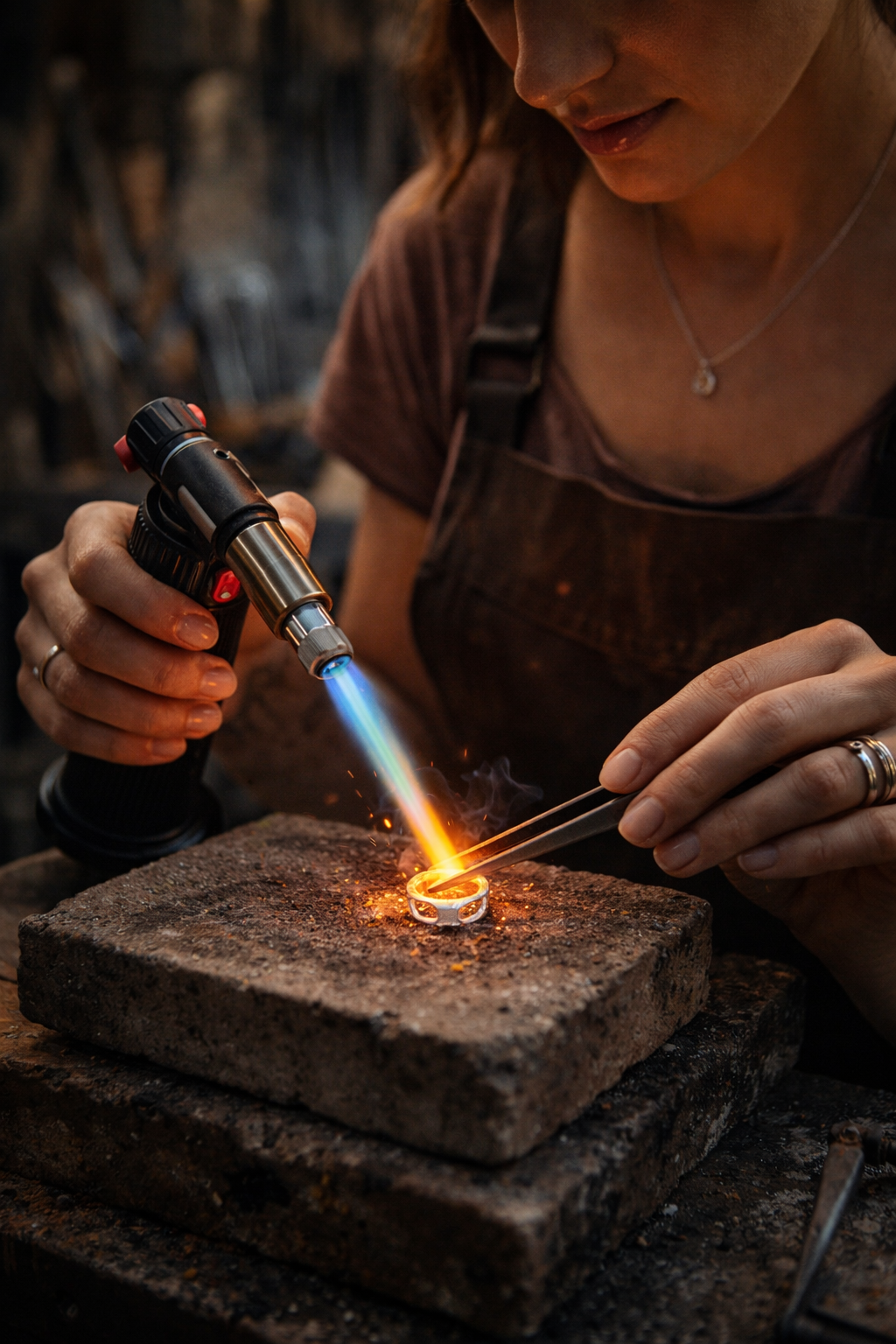
Metalsmithing
There’s something deeply satisfying about taking a rigid material and coaxing it into something expressive or precise. Metalsmithing is one of those crafts that sits right at the intersection of art, engineering, and a bit of alchemy. It’s the practice of shaping, joining, and finishing metal to create functional objects, jewelry, tools, sculpture, and architectural elements. Even though the word sounds ancient, the techniques are very much alive today. It’s tactile, rhythmic, and surprisingly meditative. And unlike many crafts, the results can last centuries.
Common Metals
Metals come in Sheets and Wire. Both of varying Sizes and Widths (gauges), Hardness: ie: soft, dead soft, hard; and composition: Raw (ie. Pure silver) or Combined (ie: silver plated copper). Common uses are Jewelry, Bezels, Wire wrapping, and Jewelry findings.
- Copper – soft, forgiving, great for beginners.
- Brass & bronze – harder than copper, beautiful color.
- Silver – traditional for jewelry; excellent workability.
- Gold – luxurious, malleable, often alloyed for strength.
What Metalsmithing Involves
- Forming – hammering, bending, forging, raising, sinking. This is where raw metal becomes a shape.
- Joining – soldering, welding, riveting, or mechanically connecting pieces.
- Cutting – sawing, shearing, chiseling.
- Surface work – filing, sanding, polishing, engraving, etching, patination.
- Heat control – annealing to soften metal, hardening through work or quenching.