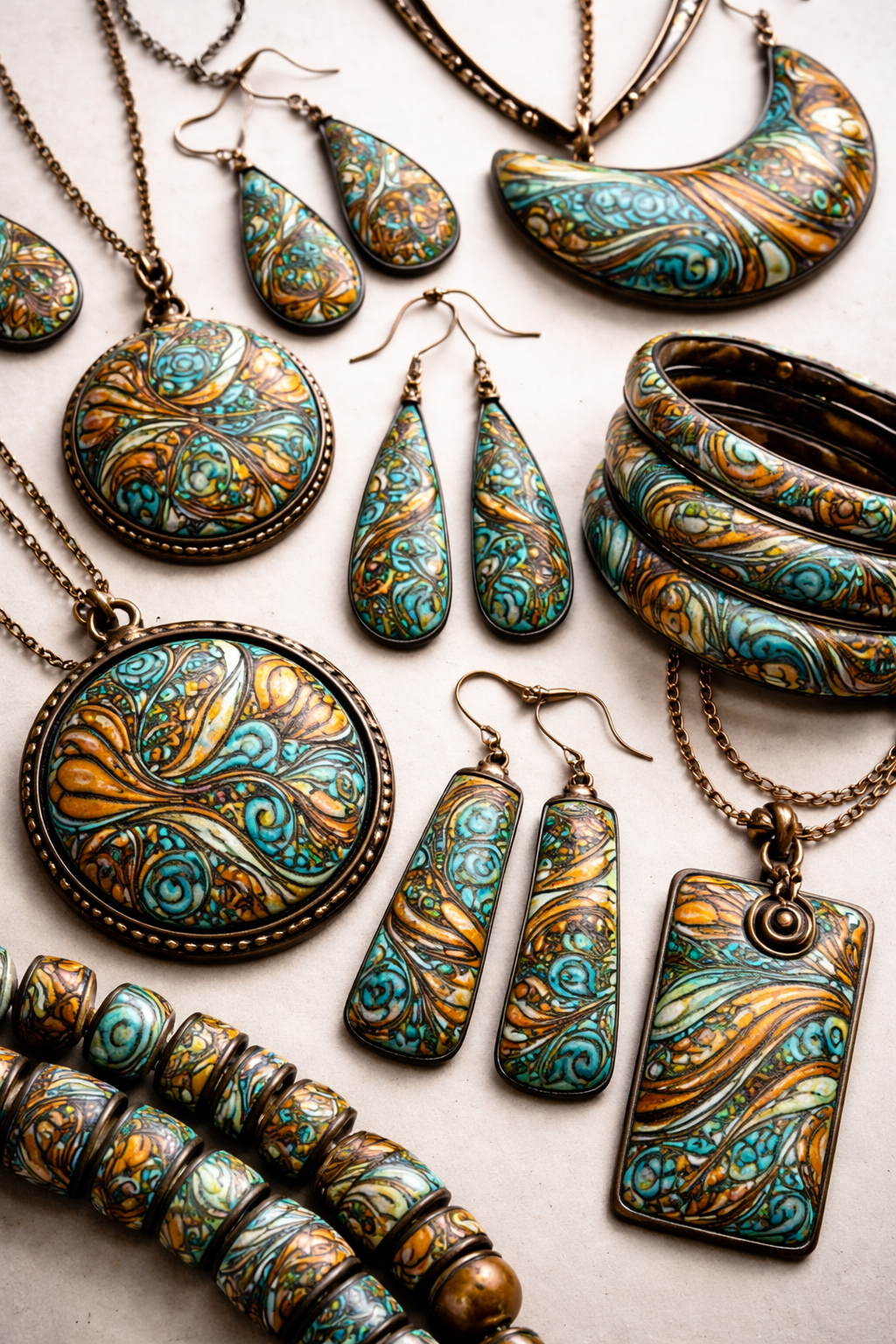
Polymer Clay
Polymer clay is a modern sculpting medium with a rich creative history. While clay adornments date back thousands of years, the earliest known polymer clay was developed in the 1930s by German doll maker Kathe Kruse. The material, later known as FIMO, was originally created for dollhouse miniatures in Europe.
In the 1960s, polymer clay evolved further and by 1967 in the United States, it was transformed from an industrial compound into a flexible, sculptable art medium. With the introduction of Sculpey, polymer clay became widely accessible and quickly gained popularity among artists and jewelry makers.
Today, polymer clay is celebrated for its versatility and ability to replicate natural materials such as stone, marble, and gemstones.
Techniques & Color Blending
Polymer clay allows for a wide range of artistic techniques, including layered patterning, marbling, smooth color gradients, and surface texturing. These methods create organic movement and depth within each design.
Colors are blended by hand, much like paint, allowing for endless custom hues. Translucent, metallic, and pearl clays add dimension and natural variation—ensuring no two pieces are ever exactly alike.
Our Approach
Inspired by natural landscapes and organic textures, each piece is carefully formed, blended, and finished by hand. Through thoughtful technique and custom color palettes, polymer clay becomes wearable art—crafted to celebrate individuality, movement, and timeless design.